



Becoming the first doctor in your family is a big deal. Not just for you, but for everyone at home. Nobody has been through this before, so everything feels new and sometimes confusing. There is a lot of pride in it, but also a lot of pressure that most people do not talk about openly.
1. Being the first doctor in the family is not just a career choice, it is a completely new journey for the entire family.Since there is no family roadmap to follow, the process can feel overwhelming. No one at home fully understands medical education, entrance exams, clinical training, or licensing processes. The student and the family often learn everything for the first time together, which can create both excitement and uncertainty. 2. Unlike families with doctors, first-generation students usually grow without medical guidance at home.Unlike families with doctors, first-generation students usually grow up without medical guidance at home. There may be no one to explain career paths, specialisations, hospital culture, academic expectations, or study strategies. Students often rely on internet research, seniors, mentors, and personal experience to navigate the system. At times, this can make them feel underprepared compared to peers from medical backgrounds. |  |
3. The student may feel pressure to “change the family’s future.”
The student may also feel pressure to “change the family’s future.” Many first-generation doctors come from families making huge financial and emotional sacrifices to support their education. This creates hidden pressure to succeed and not disappoint the people who have invested so much in them. The emotional burden can quietly become very intense.
4. Medicine is much longer than many families initially expect.
Medicine is much longer and more demanding than many families initially expect. Parents often think that once MBBS begins, the hardest phase is over. However, the reality includes years of study, clinical training, licensing exams, postgraduate preparation, and residency. The journey is a marathon that requires patience and emotional resilience.
5. The student may struggle with guilt constantly.
The student may struggle with guilt throughout the journey. They can be guilty about spending family money, not giving enough time to family, poor exam performance, taking breaks, or feeling emotionally exhausted. Many first-generation medical students carry these emotional burdens silently while trying to meet expectations.
6. Families sometimes expect immediate success after admission into medicine.
Families sometimes expect immediate success after admission into medicine. However, becoming a doctor is a long process filled with difficult semesters, failed exams, self-doubt, and emotional stress. Struggle in medicine is normal and should not be mistaken for failure.
7. Families must learn to support emotionally, even if they cannot guide academically.Families must learn to support emotionally, even if they cannot guide academically. A student does not always need solutions; sometimes they simply need encouragement, patience, understanding, and a safe space to talk openly. Emotional support at home can make a huge difference in helping students handle the pressures of medical education. In the end, being the first doctor in the family is not easy. It is also something special. It is a journey where everyone learns and grows together, and that is something worth being proud of. It is a path where everything is learned for the first time, often through struggle and growth. While the challenges can feel heavy, they also build resilience, independence, and deep personal strength. If you need help navigating these choices, Map My MBBS is here to provide the strategy and clarity you need to move forward with confidence. | 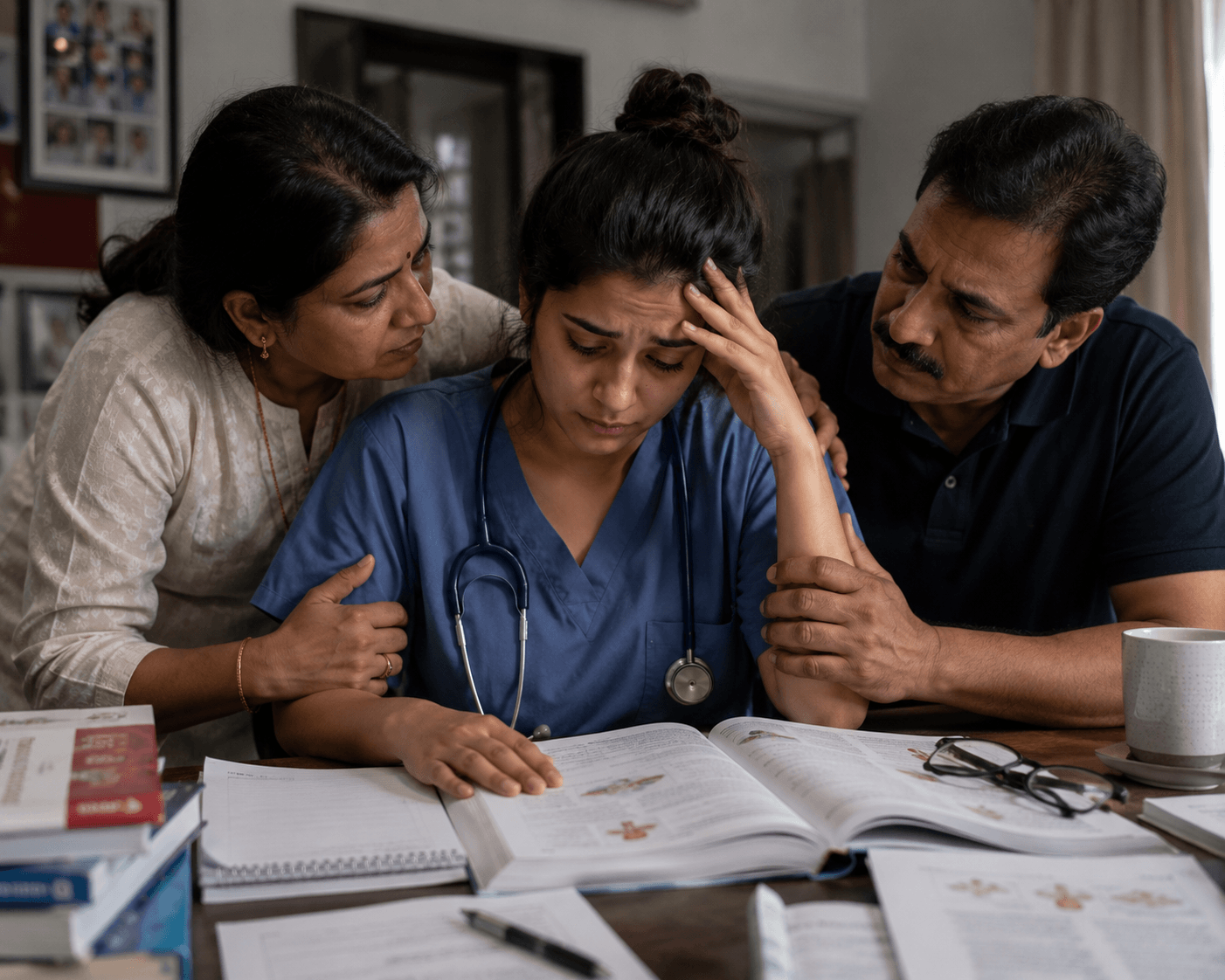 |