



Frequently Asked Questions About MBBS Abroad Every Student Asks
With over 50,000 Indian students heading abroad for MBBS every year, it is one of the biggest decisions a family makes. Yet most students go in with half the information they need. These are the 15 questions that matter most.
1. Who is eligible to study MBBS abroad?
Any student who has completed Class 12 with Physics, Chemistry, and Biology is eligible, provided they have scored a minimum of 50% marks in the general category or 40% in the reserved category. Clearing NEET is also a mandatory requirement for Indian students planning to practice medicine in India after their degree.
2. Is NEET mandatory for MBBS abroad?
Yes, it is. Indian students who wish to return and practice in India must have a valid NEET score. Without it, you will not be allowed to appear for the NExT screening exam, which is the gateway to getting a medical licence in India after studying abroad.
3. What is the duration of MBBS abroad compared to India?It varies by country, but most programmes wrap up in about 5 to 6 years, including clinical rotations. In India, the course runs for 5.5 years with a compulsory internship built in. A handful of countries may ask for an additional internship period once the degree is done. 4. Are scholarships or education loans available for MBBS abroad?Yes, both are available. Some governments offer merit-based scholarships to international students, while back home, banks like SBI and Bank of Baroda have education loan schemes designed specifically for students going abroad for MBBS. It is worth looking into both options before you finalise your destination. | 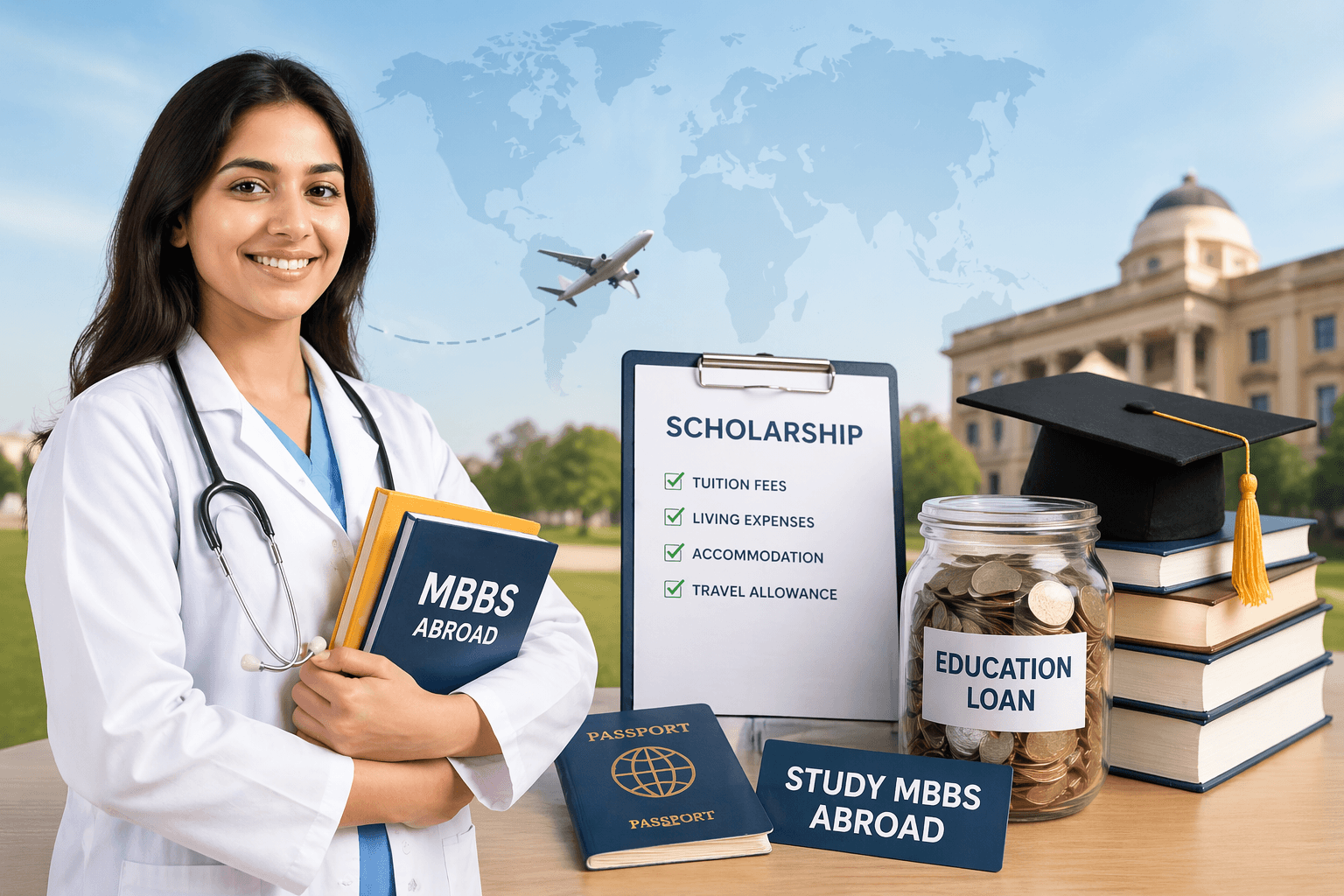 |
5. What are the hidden costs students don't account for?
Tuition is just one part of the picture. A lot of students forget to factor in visa fees, health insurance, study materials, daily living expenses, local transport, and trips back home during holidays. Depending on the country, these can quietly add anywhere between 2 to 5 lakhs to your annual budget. Always keep a financial buffer ready.
6. Which countries are the most popular for MBBS abroad among Indian students?Russia, Kazakhstan, Tajikistan, Kyrgyzstan, Georgia, Nepal and Uzbekistan are consistently the top choices. These countries have WHO-recognised universities, relatively affordable tuition, English-medium programmes, and a large Indian student community already in place, which makes settling in a lot less daunting. |  |
7. How do I choose the right college and country?
For the college, focus on whether it is recognised by the NMC and listed in the WDOMS, the quality of faculty, clinical training infrastructure, and hostel facilities. For the country, think about the cost of living, visa process, safety, weather, and whether classes are taught in English. Do not go by rankings alone. Talk to students currently studying there and get advice from a counsellor you trust.
8. How do I verify if a foreign medical college is recognised?Start with the World Directory of Medical Schools, commonly known as WDOMS. If the college is not listed there, the degree will not be valid for licensing exams like FMGE or NExT. Indian students should also check whether the college appears on the NMC approved list. Skipping this step can cost you years of effort and money. |  |
9. Is an MBBS degree from abroad valid in India?
Yes, but only under certain conditions. The university needs to be recognised by the NMC and listed in the WDOMS. Once you return, you will need to clear the NExT exam to get your licence to practice. This exam has replaced the older FMGE and is now the standard screening test for all foreign medical graduates.
10. Can I practice in other countries after completing MBBS abroad?
Yes, you can, though each country has its own set of requirements. The US requires the USMLE, the UK has the PLAB, and Australia uses the AMC exam. Most countries also have language proficiency requirements and a period of supervised practice before granting full licensure. The key is to research the requirements of your target country early, not after you graduate.
11. Will there be a language barrier while studying and during clinical practice?It depends on where you go. Many universities in Russia, Tajikistan, Kazakhstan, and Kyrgyzstan offer English-medium programmes for international students, so classroom learning is usually manageable. |  |
12. How safe is it for Indian students, especially women, to live and study abroad?
Safety really does depend on the country, the city, and the specific university. Tajikistan, Kazakhstan, and Kyrgyzstan are generally regarded as welcoming and safe for Indian students. In Eastern European countries, experiences can vary from city to city. Before making a decision, go through student reviews, check your government's travel advisory, and make sure the university provides secure hostel accommodation with proper facilities for women.
13. How is the quality of teaching and clinical training abroad compared to India?
Studying abroad usually means a more flexible curriculum, greater emphasis on research, and earlier exposure to real patients. Medical education in India is more structured and significantly more affordable, though it can lean heavily on theory and the quality of infrastructure differs greatly from one college to another. There is no universal answer here. What works best depends on your learning style, your career goals, and how much you are willing to spend.
14. What is campus and hostel life like for Indian students abroad?Most students describe it as one of the more unexpected highlights of the whole experience. Modern campuses, exposure to different cultures, and the independence that comes with living away from home all add up. Hostel life means you are rarely going through any of it alone, which takes the edge off homesickness. Most students find their footing faster than they thought they would and come away with friendships and experiences that go well beyond medicine. |  |
15. How early should a student start the application process and what does it involve?
Start at least a year before you plan to leave. The process covers a lot of ground including clearing NEET, shortlisting universities, collecting documents like transcripts and certificates, applying for admission, sorting out finances, and applying for a student visa. Each of these steps takes longer than most students expect, and a delay in one can slow everything else down. Starting early means you are making decisions with a clear head rather than scrambling to meet deadlines.